There's something undeniably powerful about a flip phone—especially when you're ending a call dramatically. But beyond the nostalgia, is the Samsung Galaxy Z Flip 4 actually worth your money in a world full of capable candy-bar smartphones? Short answer: yes — and here's exactly why.
Watch: This Folding Phone Is Actually Awesome: https://youtu.be/PEJXe1xuL1A
Build: Refined, Not Reinvented
The Flip 4 arrives in a matte finish with Gorilla Glass Victus+ — a direct upgrade from the glossy, slippery Flip 3. The aluminum sides are now glossy, essentially flipping (pun intended) the previous design language. The hinge is slightly slimmer but noticeably sturdier, and Flex mode lets the phone hold itself at any angle — genuinely useful when apps are optimized for it. Despite the hinge gap, the Flip 4 carries an IPX8 rating — water resistant up to 1 meter for 30 minutes. No dust rating, but Samsung's oleophobic coating on the internals handles that concern reasonably well.
The Outer Screen: Actually Useful
The 1.9-inch outer display isn't just a notification ticker. Swipe down for quick toggles, swipe right for messages, swipe left for active apps. You can even dictate replies without ever unfolding the phone — which keeps the soft inner screen safe from unnecessary wear. It's a genuinely smart way to extend the phone's utility in folded form.
Unfolded: Full Flagship Experience
Open it up and you get a 6.7-inch Full AMOLED display at 120Hz with true variable refresh rate — all the way down to 1Hz when static. Dual firing speakers, a side-mounted fingerprint reader, and slightly smaller bezels than its predecessor round out the experience. Everyday performance on the Snapdragon 8+ Gen 1 is buttery smooth. The catch: extended gaming sessions cause thermal throttling after roughly five minutes. General use? No issues. Marathon gaming? Bring a fan.
Battery: A Real Upgrade
The Flip 3's 3,300mAh battery was a known weak spot. The Flip 4 bumps that to 3,700mAh — finally an all-day phone. Add 25W fast charging (55% in 30 minutes with the right charger, sold separately) and the battery anxiety largely disappears.
Camera: Consistent Over Flashy
Two 12MP shooters may sound modest, but Samsung's computational photography consistently outperforms the Motorola Razr 2022's 48MP sensor in real-world conditions — especially in mixed lighting. The clever trick: double-click the power button on the outside to open the camera and use the outer screen as a viewfinder, shooting with the main sensors instead of the weaker inner selfie camera.
Bottom Line
The Galaxy Z Flip 4 is the most refined compact foldable on the market — iterative upgrades done right. It slips into any pocket, unfolds into a full-sized phone, and delivers a premium experience at a foldable price point. The screen crease is still there, but everything else? Nearly there.
Would you make the switch to a foldable in 2026? Drop your take below.
Reviewed by Toolsplit. Impressions are entirely our own.
Want me to add an SEO meta title + description for toolsplit.com, or export this as a downloadable doc?
with this https://youtu.be/VbMEY3RFmrE write me an article for this title Nothing Phone 1 in 2026: Still a Smart Budget Buy?and Nothing Phone 1 in 2023 Shocking Value! In the article, create a place for me to embed the link to the video Let the article not be more than 500 words
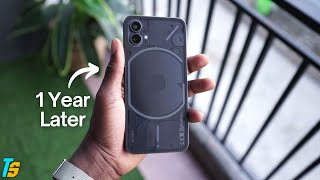
Here's your article — built entirely from the video transcript, under 500 words with the embed slot ready.
Nothing Phone 1 in 2026: Still a Smart Budget Buy?
Published by Toolsplit | Updated 2026
The Nothing Phone 1 launched with one of the most distinctive designs in modern smartphones — a transparent back, exposed wireless charging coil, and a glowing Glyph interface that made strangers stop and ask "what phone is that?" Years later, the question worth asking is: does it still make sense to buy one? After a full year of daily use, here's the honest answer.
Watch: Nothing Phone 1 — Shocking Value! https://youtu.be/VbMEY3RFmrE
The Glyph Interface: Cool Gimmick or Core Feature?
Nothing's vision was bold — flip the phone face down, rely on the Glyph lights for silent notifications, and break your screen-dependency habit. In practice? Most people never fully make the switch. Years of muscle memory — phone face up, quick tap to check the time — don't disappear overnight. The Glyph is undeniably eye-catching, but for most users it fades into a background feature rather than a lifestyle shift.
Design: Still Turning Heads
Here's what hasn't faded — the design. The transparent back glass with exposed internals continues to attract curious looks, especially mid-call. It looks and feels more premium than anything else at its price range. The build quality holds up remarkably well against daily abuse — still clean, still solid, still unique to Nothing.
Software: One of the Smoothest Android Skins Going
Nothing OS remains genuinely impressive. Even after filling up half the storage, apps load quickly, transitions stay smooth, and the phone has never frozen mid-game — something most mid-range Android phones can't claim after a full year of use. The Snapdragon 778G Plus paired with Nothing's software optimizations is the reason. Performance holds up.
The one exception: camera shutter lag. The camera app loads fine, but the moment you tap the shutter, a noticeable delay crept in over time. Photos are still decent and acceptable — just not instant.
The Bug Problem: Real But Manageable
The Phone 1 carries a persistent bug list — USSD code inputs greying out (a real problem in markets where mobile banking relies on them), Flip to Glyph occasionally not responding, phantom Bluetooth audio cutouts, and a screen flash on lock. None are deal-breakers in isolation. Collectively, over time, they add up.
The upside: Nothing's community is active and engaged. Bug reports go directly to Nothing reps, and OS updates — including Nothing OS 2.0 with new home screen customization, widget system, and Glyph improvements — keep the device improving post-purchase.
Bottom Line
If you're budget-conscious, the Nothing Phone 1 remains a smart buy — great screen, generous RAM and storage, wireless charging, fluid software, and a design that still stands out. If your budget stretches further, the Nothing Phone 2 (or 4a Pro today) offers meaningful upgrades.
Would you still buy the Nothing Phone 1 in 2026? Drop your take in the comments.